How the story works
Anatomy of a Heist
Heist stories are built to a pattern almost as fixed as a sonnet. Knowing the pattern makes them more fun to watch, not less.
The setup
A target is introduced: a bank vault, an armoured van, a museum piece. Often there is a personal motive too, such as revenge, a last job before retirement or a debt to settle.
Assembling the crew
The recruitment sequence is a chance to meet each specialist in a short scene that shows their skill. It is one of the genre’s most enjoyable conventions.
The plan
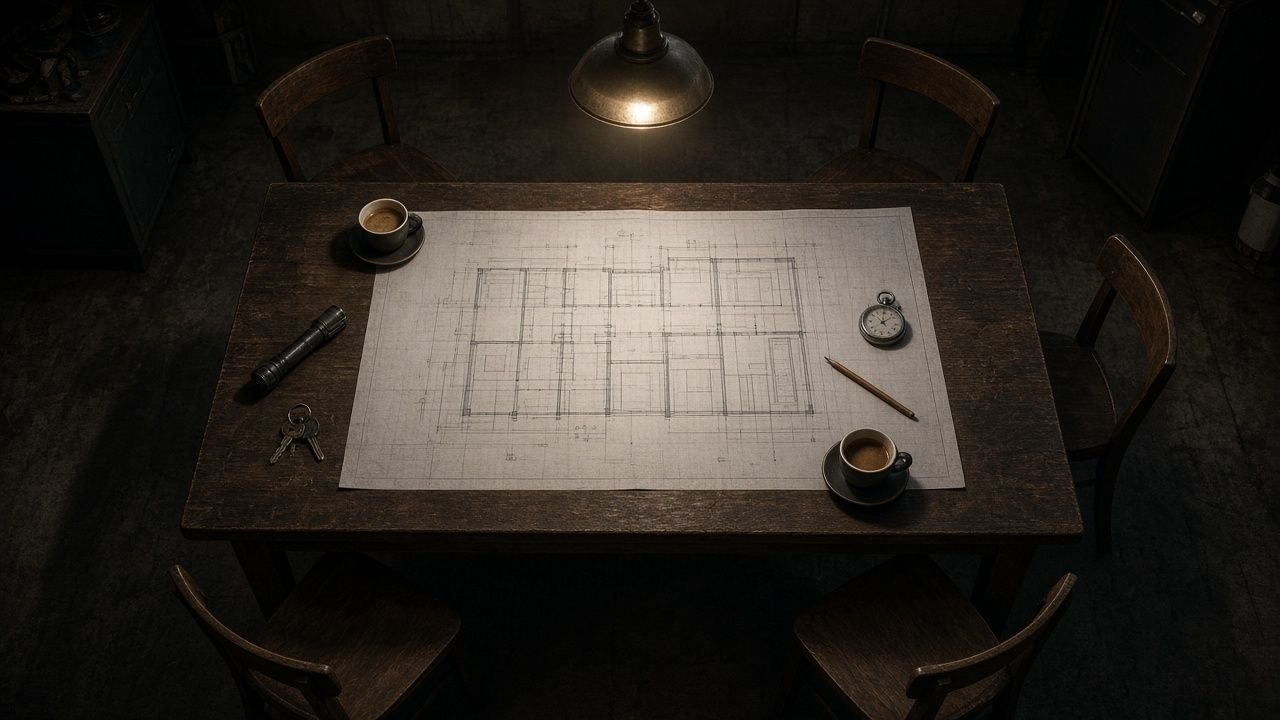
A model, a floor plan or a briefing tells us how the job should go. Some films show the plan in full; others hide a key part so it can surprise us later.
The job
The robbery itself is usually the centrepiece, often played with little dialogue. Small problems pile up and the crew improvises.
The twist and the getaway
Something goes wrong, or appears to. A double cross, a hidden part of the plan or a stroke of bad luck changes everything before the final escape, or the final failure.
The ending
Older films, made under strict production codes, often had to show the thieves punished. Later films let them get away, which tells us a lot about how audiences came to see these stories.
Next: Heist Films